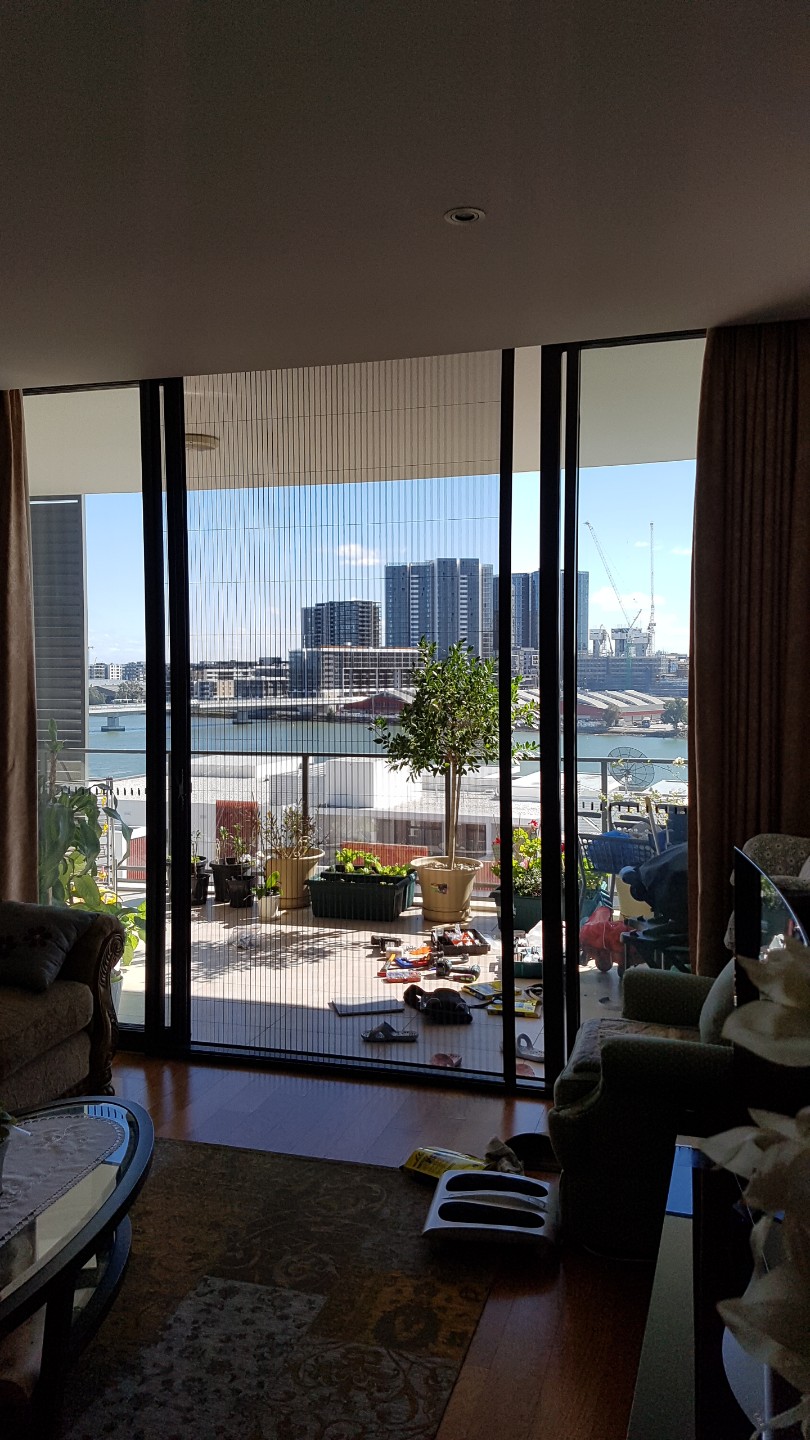
The first designs for roller blinds were simple and effective. The blind was a screen that could either cover the window or be retracted onto a spring loader roller at the window’s top ledge. Else, it could be used to partly cover the window. This proved so popular that this basic still endures today, two generations later.
As the blind material was fabric it could be coloured or decorated in almost any fashion. So blinds could be easily tailored to suit almost any room décor.
The blind’s long-term operation relied on a good spring mechanism. So quality was important for long-term use.
Older style roller blinds retracted to a roller drum at the top of the window. They hung loosely from this one point of attachment. This means they could be move in the breeze and let light in around the sides, so there was never total darkness with these blinds. Yet this is usually not an issue.
Cassetted roller blinds are a more advanced design. The roller mechanism is contained in a metal box that prevents any damage, and the sides of the blind run through guide channels on the side of the window. This makes for a fully encloses mechanism.
These fully cassetted window blinds can block out all the outside light. This is useful for entertainment rooms, home cinemas with screens and televisions, or photographic studios. Sometimes people prefer complete darkness if they have to sleep after shift work.
Cassetted Roller Blinds are as effective as window shutters, blocking all the outside light, but they are more convenient and take up less room.
Blinds can be custom-made to suit any window and tailored to suit almost any décor. Enquire and order online to have the best blinds for your home.
Information Disclaimer The content of this article is meant for informational purposes only and should not be considered a source of professional advice, recommendations, or endorsements. It is not a substitute for seeking expert guidance or making well-informed decisions based on individual circumstances. Although we strive for accuracy and reliability, we cannot guarantee the information's completeness or suitability for all situations. Readers are urged to verify facts, consult experts, and consider their own context before taking actions or decisions based on this content. No warranties, explicit or implied, are provided regarding the accuracy, timeliness, or completeness of the presented information. Relying on this information is at the reader's own discretion and risk. We encourage readers to consult relevant professionals or experts for advice tailored to their specific needs. Neither the author, publisher, nor any affiliated parties will be held responsible for errors, omissions, or damages resulting from the use or reliance on the information in this article.
Insects are a problem during some parts of the year, usually the summer months. It makes a lot of sense to use flyscreens during these months to keep insects out of the house.
Yet we might want to put the screens away during the months when insects are not a problem. Older style windows did not allow this. But modern screens give us several options.
A retractable fly screen is possible because of the flexible fly screen mesh. This allows screens to be rolled up and stored, sometimes at the window, sometimes stored elsewhere. Older style screens were either inflexible and permanently attached to the window, or were a flexible style that required a solid frame to retain their shape. Retractable screens are more convenient than these older options.
At SK Screens we believe the best retractable fly screen option is the 4-sided Button roll insect screen. This conveniently rolls into an overhead bar above the window.
Fly Screens mesh can also be fitted to the windows magnetically, or with Velcro. But we believe the 4-sided or 3-sided retractable screens are superior.
Consider fly screen frames for your home during summer, so you can enjoy the weather and the breeze without the insects.
Information Disclaimer The content of this article is meant for informational purposes only and should not be considered a source of professional advice, recommendations, or endorsements. It is not a substitute for seeking expert guidance or making well-informed decisions based on individual circumstances. Although we strive for accuracy and reliability, we cannot guarantee the information's completeness or suitability for all situations. Readers are urged to verify facts, consult experts, and consider their own context before taking actions or decisions based on this content. No warranties, explicit or implied, are provided regarding the accuracy, timeliness, or completeness of the presented information. Relying on this information is at the reader's own discretion and risk. We encourage readers to consult relevant professionals or experts for advice tailored to their specific needs. Neither the author, publisher, nor any affiliated parties will be held responsible for errors, omissions, or damages resulting from the use or reliance on the information in this article.